
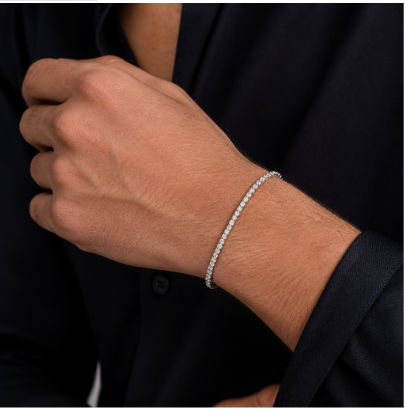
Few pieces of fine jewelry have maintained their cultural relevance and aesthetic power quite like the diamond tennis bracelet. Across decades of shifting fashion trends, evolving red carpet aesthetics, and changing consumer tastes, this singular piece has never lost its footing. It sits at the intersection of elegance and versatility — equally at home on a formal evening gown as it is layered with casual weekend wear. Understanding why this bracelet endures requires a closer look at its craftsmanship, its history, and the way it continues to evolve in the modern jewelry market.
A Brief History of the Tennis Bracelet
The term “tennis bracelet” entered the popular lexicon in 1987, when professional tennis player Chris Evert famously paused a match at the U.S. Open to search for her lost diamond bracelet. The moment was broadcast widely, and almost overnight, the delicate in-line diamond bracelet became synonymous with the name. Before that moment, these bracelets were simply referred to as “eternity bracelets” or “in-line diamond bracelets.” The Evert incident gave the piece a personality, a story, and a cultural identity that has never faded.
What makes this origin story so compelling is that it was entirely unscripted. There was no marketing campaign, no celebrity endorsement deal — just a spontaneous moment that captured the imagination of millions. That authenticity has followed the bracelet ever since, lending it a kind of organic prestige that manufactured trends rarely achieve.
The Anatomy of a Well-Crafted Tennis Bracelet
Diamond Quality and Selection
The quality of a diamond tennis bracelet is determined by the same four criteria used to evaluate any diamond: cut, color, clarity, and carat weight. However, in a tennis bracelet, consistency across all stones is paramount. Because the bracelet features a continuous line of diamonds, any variation in color or size becomes immediately visible to the trained eye. The most desirable bracelets feature stones that are matched for color grade — typically in the near-colorless range of G to I — and cut to maximize brilliance uniformly across the entire setting.
For those researching diamond shapes before making a purchase, understanding which cuts are trending can be genuinely useful. According to a detailed overview of the most popular diamond shapes in 2026, round brilliants continue to dominate the market, though princess and cushion cuts are gaining traction in bracelet settings as consumers seek more personalized aesthetics.
Setting Styles That Define the Look
The setting style of a tennis bracelet significantly influences both its appearance and its security. The classic prong setting allows maximum light to enter each stone, producing exceptional brilliance. Bezel settings, where each diamond is encircled by a thin metal rim, offer a more modern, streamlined look while providing additional protection for the stones. Channel settings, in which diamonds are set between two parallel metal rails, offer a sleek, contemporary profile that appeals to minimalist sensibilities. Each setting style carries its own visual language, and the right choice depends on the wearer’s lifestyle and personal aesthetic.
How to Wear a Diamond Tennis Bracelet with Intention
One of the most compelling qualities of the diamond tennis bracelet is its adaptability. It does not demand a specific context or occasion. Worn alone, it speaks with quiet authority. Stacked with other bracelets — whether gold bangles, beaded pieces, or leather wraps — it anchors the wrist with a flash of brilliance that elevates the entire combination. The key is intentionality. A tennis bracelet should never feel like an afterthought; it should be the piece around which the rest of the look is built or the final flourish that completes it.
For those looking to develop a more sophisticated approach to accessorizing with diamonds, the art of elevating your look with diamond accessories offers thoughtful guidance on how to layer and style fine jewelry without overwhelming an outfit. The principles outlined there apply directly to the tennis bracelet — treating it as a foundational piece rather than a decorative add-on.
Choosing the Right Carat Weight for Your Lifestyle
Carat weight in a tennis bracelet refers to the total weight of all diamonds combined, not the weight of a single stone. A bracelet with a total carat weight of two carats will look noticeably different from one with five carats, even if the individual stones are similar in size. For everyday wear, a bracelet in the two to three carat range offers a refined sparkle without feeling excessive. For special occasions or those who prefer a bolder statement, four carats and above delivers a more commanding presence on the wrist.
Metal choice also plays a role in the overall visual weight of the bracelet. White gold and platinum enhance the icy brilliance of colorless diamonds, while yellow gold creates a warmer, more vintage-inspired contrast. Rose gold has emerged as a popular alternative for those seeking a romantic, contemporary feel that pairs well with both cool and warm skin tones.
Leon Diamond: A Standard of Excellence in Tennis Bracelets
When it comes to sourcing a tennis bracelet that reflects genuine craftsmanship and diamond expertise, Leon Diamond has established itself as a trusted name in the fine jewelry space. With a curated selection that spans a range of carat weights, metal types, and setting styles, the brand caters to buyers who understand that quality is not just about price — it is about precision, consistency, and the integrity of every stone in the line. Their commitment to transparency and personalized service makes the process of selecting a bracelet feel considered rather than transactional.
The Context Paragraph: Why the Diamond Tennis Bracelet Endures
The enduring appeal of the diamond tennis bracelet lies not in trend cycles but in its timeless construction and the way it interacts with light. Whether you are purchasing your first fine jewelry piece or adding to a curated collection, a diamond tennis bracelet represents one of the most reliable investments in wearable luxury. Its design has remained largely unchanged for decades because it does not need to change — the continuous line of diamonds, the secure clasp, the flexible setting that moves naturally with the wrist, all of it works in perfect harmony to create something that is both functional and breathtaking.
Caring for Your Tennis Bracelet Over Time
Proper maintenance ensures that a diamond tennis bracelet retains its brilliance for generations. Regular professional cleaning — ideally once or twice a year — removes the buildup of oils, lotions, and everyday residue that can dull a diamond’s surface. At-home cleaning with a soft brush, mild dish soap, and warm water is effective for routine upkeep between professional visits. It is also advisable to have the prongs or settings inspected periodically, as daily wear can gradually loosen the metal that holds each stone in place.
Conclusion
The diamond tennis bracelet is not simply a piece of jewelry — it is a declaration of refined taste and an investment in lasting beauty. Its history is rich, its craftsmanship demanding, and its versatility unmatched in the world of fine accessories. Whether worn as a standalone statement or as part of a layered wrist composition, it brings a level of sophistication that few other pieces can replicate. For anyone serious about building a meaningful jewelry collection, the tennis bracelet is not optional — it is essential.
