
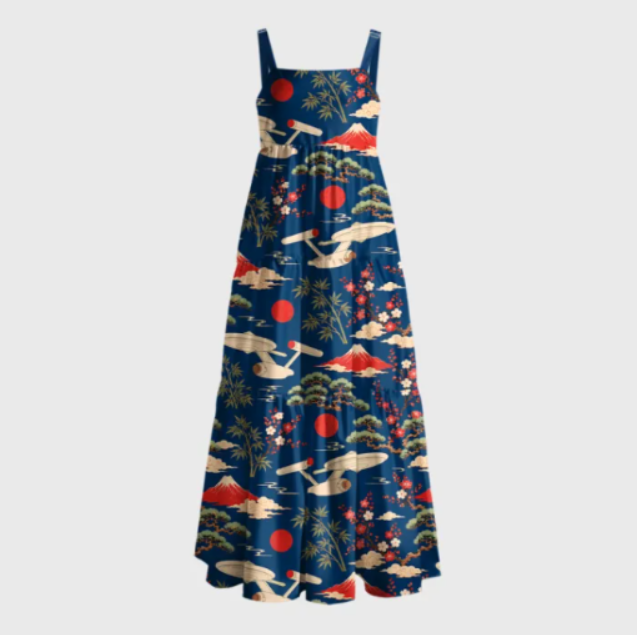
The maxi dress has a reputation problem. Petite women are told it’ll swallow them. Tall women can’t find one that reaches their ankles. Plus-size women get steered toward shapeless tents. All three complaints are valid, and all three are solvable with the right cut.
The tiered cami maxi — the style behind most geek maxi dress collections right now — is a useful test case, because its structure is the same for everyone but the effect changes with proportion. Let’s go through each frame.
Understanding the Cut First
A tiered cami maxi has three moving parts:
- The bodice: fitted or slightly fitted, with thin straps.
- The tiers: horizontal panels that get progressively fuller toward the hem.
- The hem: usually designed to hit ankle or floor at an average height.
Each of those affects each body type differently. The tiers add volume. The bodice defines where the waist reads. The hem length dictates whether the dress looks intentional or borrowed.
Petite Frames (roughly 5’4″ and under)
The problem
Extra fabric pools at the hem, and horizontal tiers can visually chop a shorter frame into segments, making it look shorter.
What works
Look for dresses with the first tier seam sitting at or just above the natural waist — a high-waisted tier line lengthens the leg visually. Fewer, larger tiers beat many small ones; three tiers is friendlier than five.
Hem length is the make-or-break. A maxi that’s designed to hit the floor on a 5’7″ frame will puddle on you. Check the garment length in the size chart against your own shoulder-to-floor measurement, and look for stores that offer the dress in petite or list actual lengths. If a hem is an inch or two too long, a simple hem is a $15 alteration and worth every cent.
Styling
Vertical elements help. A long pendant necklace, an open front cardigan or duster, and shoes in a color close to your skin tone all extend the line. Platform sandals or a low wedge add height without making walking miserable.
All-over prints work better than horizontal stripes on petite frames — a busy, non-directional print like a fantasy map or a starfield doesn’t emphasize the tier seams the way a striped tier would.
Tall Frames (roughly 5’9″ and up)
The problem
The hem hits mid-calf and reads as a midi that didn’t quite commit. Bodices can sit too high if the torso is long.
What works
Length again, but the other way. Look for dresses listing garment length of 55 inches or more, or explicitly labeled tall. Tiered maxis are actually kind here — because the volume is in the skirt, a slightly shorter hem still reads as intentional in a way a straight maxi doesn’t. Ankle-length is completely fine and often looks more modern than floor-sweeping.
Adjustable straps are essential. A longer torso needs a strap that can let out so the bodice seam sits at the right point.
Styling
Tall frames can carry bold, large-scale prints that would overwhelm a shorter body. This is where the big graphic maxis shine. Flat sandals or sneakers keep the proportions grounded. A cropped jacket that ends at the waist emphasizes the bodice and balances the long skirt. Or knot a fitted tee over the bodice — a small-print tee from Geeksoutfit’s geek shirts range turns the dress into a skirt-and-top look.
Plus-Size Frames
The problem
Many maxis in extended sizes are cut as a single shapeless column, and the “just add more fabric” approach to sizing makes tiers balloon.
What works
A defined bodice is the whole story. A cami maxi with a fitted or semi-fitted top and tiers that start at the waist gives shape without constriction — it’s fitted where you want structure and loose where you want comfort. Avoid empire waists that start under the bust; they push volume forward.
Fabric with a bit of weight drapes better than thin, floaty material that clings and flutters. A cotton blend or a heavier poly knit falls in clean lines.
Check that the store’s size chart actually scales proportionally — bust, waist, and hip measurements should increase together, and strap length should be adjustable. Geeksoutfit’s geek maxi dreses use a tiered cami cut with a fitted bodice, and the all-over sci-fi and fantasy prints are non-directional, which matters here: a print with no strong horizontal or vertical line doesn’t pull the eye anywhere in particular, so the dress reads as one clean silhouette.
Styling
A belt at the natural waist, either matching or contrasting, sharpens the line further if you want it. A denim or cropped jacket adds structure at the shoulder. Heeled sandals or a block heel lengthen; sneakers keep it casual. Skip long, shapeless cardigans that hide the bodice you chose for a reason.
Everyone: Three Checks Before Buying
- Garment length vs. your shoulder-to-floor. Aim for a hem that lands between ankle bone and floor in the shoes you’ll actually wear.
- Where the first tier seam sits. At or near your natural waist is the most flattering for nearly every frame.
- Adjustable straps. Non-negotiable. Torso length varies more than any size chart accounts for.
How Do You Know If a Maxi Looks Right?
Stand sideways in a mirror. The bodice should sit smooth and the tiers should fall from a clear point at the waist rather than from the bust or the hips. Walk a few steps. The hem should swing without dragging or flashing your shins. If both are true, the dress fits, whatever your height or size.
A Note on Alterations
Hemming a tiered maxi is straightforward for any tailor because the bottom tier is a simple panel. Taking in a bodice is also routine. If a dress is 90% right, a tailor gets the last 10% for less than the price of a return-and-reorder cycle. Buy for the bodice and the print; fix the length.
