
An honoree’s name occupies one line on the program. Their booking may include a partner, children, and a parent who needs an easier route to a seat. At a hotel awards night, those people are part of the occasion, not additions to be fitted around it. Build the chair plan from the whole party that will arrive.
Keep companions attached to the honoree’s booking as attendance is confirmed. Then follow that party through the program. Someone may need assistance on the way to the stage, while a child needs to remain beside another adult in the row. Those movements affect where the group belongs. Counting the names without considering the presentation sequence can leave a family together on paper and separated during the ceremony.
Start with how long people actually sit
When selecting banquet chairs for hotel ballrooms, assess them against the actual ceremony program. Ask how long guests will sit between breaks, whether they will eat at tables, and how honorees move to the stage. A chair that works in the hotel’s dinner setup still needs to be tried in a row arrangement. The room’s existing inventory may be suitable, but the seating plan needs its own review.
Try the sample chairs while doing what guests will do: following a program, looking toward the stage, and standing to let someone leave the row. Invite feedback from users with different seating needs. A thick cushion gives little information about those movements by itself. The hotel needs suitable options that work in the complete arrangement, including a comfortable place for someone accompanying a guest who requires assistance.
Follow an honoree out of a proposed row and back into it. Which companions have to stand, and where can the returning person wait while another name is called? Work through that sequence with the venue team within the required paths and spacing. The test can reveal a poor row assignment before a guest has to negotiate it during the presentation.
Count companions and access needs together
Registration should count the people who need to sit together as well as the individual seats. Invite seating and access requests while there is time to arrange them privately. A family may need companion positions, a suitable chair, or a place for a stroller outside the circulation routes. Offer choices within the approved layout, including locations that let guests share the occasion with the people they came to support.
Include wheelchair spaces and companion seating in the planned arrangement, with the applicable sightline and access requirements checked. The Justice Department’s ADA technical assistance manual explains that accessible routes must remain usable and unobstructed. Keep those routes clear during arrivals and the ceremony, rather than treating accessibility as a drawing exercise completed before the chairs are set out.
A few questions settle most of the layout before the event:
-
How long will the longest guest sit without a break?
-
Where do honorees wait, and how do they reach the stage?
-
Which rows hold wheelchair spaces and companion seats?
-
Who approves late additions, and how do they affect the room’s permitted capacity?
Rows, rounds, and the walk to the stage
Compare the formats with the program. Rows may suit a ceremony without food service, while tables support a meal but can change how guests face the stage. Draw the occupied layout, including service requirements, rather than comparing empty-room photographs. If the event needs a changeover, identify where guests wait and allow time for the approved reset.
Rehearse the view from ordinary guest positions with people seated in front. A child beside an adult may have a different sightline, and an empty aisle may become a queue for photographs. Note those differences before assigning families to rows. Where the view cannot support the promised experience, change the position or explain the limitation before the ticket is accepted.
Agree on the honorees’ route with the organizer and the venue. Keep entry and return movements clear, including the accessible route to the presentation area where required. Place ushers where guests need directions, and rehearse the sequence before the audience arrives. Reserved rows should support that sequence without separating an honoree from needed assistance.
NFPA guidance on crowd management describes a minimum trained crowd manager for assembly occupancies and, in most facilities above 250 occupants, a ratio of one per 250 occupants. Confirm the applicable requirements with the venue and local authority. A reserve of chairs does not authorize additional occupants or another row across an exit path.
Plan the reserve before the headcount changes
A late companion request needs an answer from the event lead before it becomes a promise to the guest. Registration should identify the booking, check the latest count, and confirm the available arrangement. Fetching a chair first puts the decision in the wrong order. The ballroom team needs the accepted change in its copy of the plan before the larger party reaches the door.
The features that make a banquet chair earn its storage space are mostly practical:
-
A manufacturer-approved stack that fits the compatible cart and designated store.
-
A frame finish that resists the scuffs of constant stacking
-
Seat fabric that can be cleaned according to the supplier’s instructions between events.
-
Approved linking equipment where the layout or local requirements call for connected rows.
Inspect the spare chairs before reporting how many replacements are available. A damaged chair waiting inside the usable stack is likely to be collected during a hurried reset. Label it and move it to the repair holding area. Tell registration where the usable reserve is kept, while making clear that it replaces seats within the approved arrangement rather than increasing the event’s attendance limit.
Let the event identity sit comfortably in the room
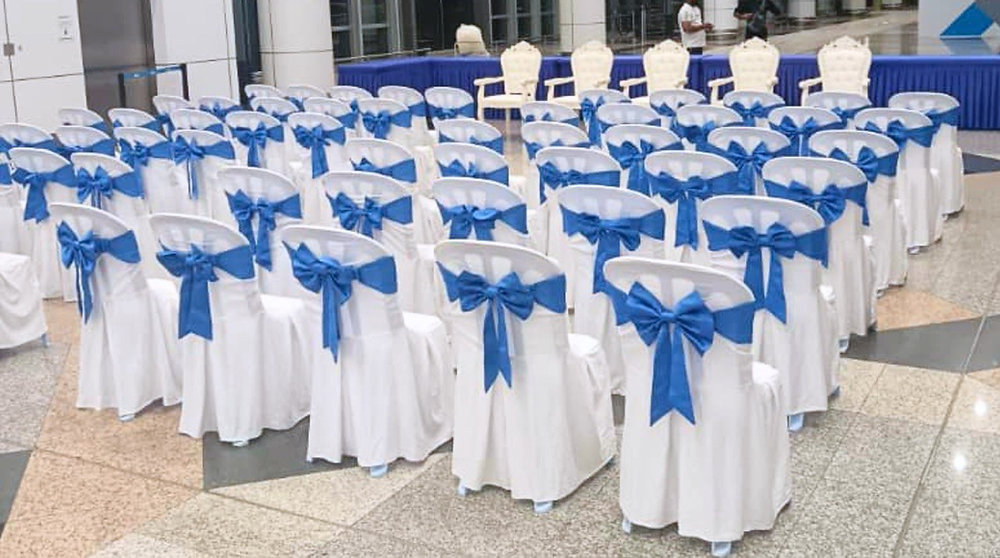
Programs and stage decorations can carry the school colors or company identity without adding a task to every chair. If the organizer requests covers or sashes, include a sample trial and their handling time in the proposal. The venue should know what that decorative choice adds to setup and clearing before agreeing to it.
Try a cover on a chair that will actually be used, then have someone sit, stand, and move it through the planned setup routine. Check whether the fabric gathers beneath the feet or hides an inspection point. Time removal and sorting as well as fitting. The hotel may find it easier to carry the event colors in programs and stage decorations than to add another handling job to every chair.
Let registration answer the seating questions
Ask about participation needs while there is time to arrange them. Cornell’s event checklist recommends inviting accommodation requests and following up on the responses. For an awards evening, assign that follow-up to someone who can coordinate the room and program. Receiving a request on a form is only the beginning; the guest needs to know what has been arranged.
The joining instructions should tell each party where to check in, when to arrive, and how to report a change in numbers. Confirm individual arrangements through the agreed contact. Give the host team the same information, with a route for late updates. A request accepted by email is not complete until the people assigning the seats can see it.
After setup, reconcile the physical chairs and reserved spaces with the latest plan. Walk the room with the organizer before opening the doors. This is the time to catch a mislabeled row or an obstructed view, while the crew can still correct it calmly.
A place for the people behind each award
Give hotel reception and the ballroom host the same final arrival information. A family asking about reserved places at the front desk should receive directions that match the row list at the door. Keep one contact available for last-minute changes. That small connection between teams lets the honoree concentrate on the occasion while their companions find the seats arranged for them.
Keep the honoree’s place reserved while they approach the stage. When they return, their companions should be able to welcome them back without searching for a seat or negotiating a changed row. Following that whole journey gives the chair plan a purpose beyond filling the ballroom: it lets the people behind the award share the moment.
