
Why Plumbing Appeals To New Career Seekers
Plumbing can be a strong fit for people who want practical work, visible results, and a career that does not keep them behind a desk all day. Plumbers help homes, restaurants, schools, hospitals, offices, and public buildings function safely. For those exploring structured training, the https://abchoa.org/education/plumbing-program/ can be a useful starting point for understanding what a formal plumbing program may cover.
The trade is demanding, but it is also varied. Some days involve clean installations in new construction, while others involve diagnosing leaks, restoring hot water, or solving drainage problems in occupied buildings. Work availability can differ by region, construction activity, specialty, and local licensing rules, so it is important to research opportunities close to home.
What Plumbers Do Each Day
A plumber’s workweek rarely looks the same from one day to the next. Residential service plumbers may respond to customer calls, while commercial crews may spend weeks installing systems from plans. In either setting, the job involves far more than replacing fixtures or clearing clogs.
- Install, repair, and test water supply lines, valves, fixtures, and drainage systems.
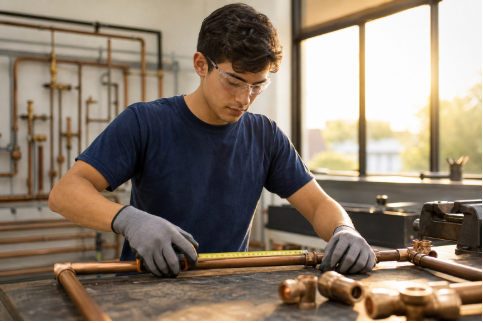
- Measure, mark, cut, join, support, and route piping accurately.
- Read drawings, diagrams, and manufacturer instructions before beginning work.
- Trace the cause of a problem rather than treating only the visible symptom.
- Explain repairs, timelines, materials, and next steps clearly to customers or site managers.
Common Training Routes
Registered Apprenticeships
Apprenticeships typically combine paid field work with classroom instruction. An apprentice learns under experienced plumbers while building familiarity with tools, codes, materials, and job-site expectations. Program length, entry requirements, wages, and application processes vary, so compare local options carefully.
Technical Schools And Community Colleges
Technical programs can give beginners a foundation in pipe systems, safety, construction math, tool use, and blueprint reading. A certificate can improve confidence and employability, but it may not replace the supervised hours or examinations needed for a plumbing license. Ask each school about lab time, instructor experience, employer relationships, total costs, and graduate outcomes.
Entry-Level Helper Roles
A helper role can provide valuable exposure before or during a formal apprenticeship. Showing up on time, keeping the work area organized, caring for tools, and following directions can help a beginner earn more responsibility. Still, hands-on experience should always come with proper supervision and training.
Career changes are common in the trades. One plumbing apprentice who moved from culinary arts illustrates how comfort with fast-paced work, attention to detail, and a willingness to keep learning can carry into a new profession.
Skills That Help Beginners Succeed
Technical Skills
Beginners should focus on basic tool handling, accurate measuring, leveling, marking, and safe pipe work. Construction math matters because small mistakes in measurements can create larger installation problems. Over time, plumbers also develop an understanding of water pressure, flow, drainage, venting, system layout, and local code requirements.
Professional Skills
Technical ability is only part of the job. Reliable plumbers communicate clearly, stay calm while troubleshooting, manage time well, and respect customers and coworkers. Keeping accurate notes, photos, material records, and job details can prevent confusion and support better service. Comfort with mobile apps, digital work orders, and new equipment is increasingly useful as well.
Safety Habits To Build Early
Safety should become automatic from the first day. Plumbing work can involve sharp tools, heavy materials, ladders, confined spaces, hot surfaces, water damage, electricity, and gas-related hazards. Careful work protects the plumber, the crew, the customer, and the building.
- Wear task-specific personal protective equipment, including eye protection, gloves, and appropriate footwear.
- Confirm that water, gas, or electrical sources are shut off when the task requires it.
- Keep work areas dry, clean, well-lit, and free of unnecessary trip hazards.
- Use ladders, cutting tools, and power tools according to training and manufacturer guidance.
- Ask before handling unfamiliar systems, materials, or hazardous conditions.
- Report damaged equipment, near misses, and unsafe conditions promptly.
A strong jobsite culture makes safety and learning easier. Good crews welcome questions, correct unsafe behavior without humiliation, and give every worker a fair chance to grow. The story of a plumber empowering girls to consider construction careers also shows why mentorship and inclusion matter in building a broader, stronger, skilled workforce.
Licensing, Credentials, And Local Rules
Many areas use a progression from trainee or apprentice to journeyman-level work and, in some places, master-level licensing. Exact requirements differ by state, county, and city. They may include documented work hours, classroom training, exams, background checks, insurance, or continuing education. Verify the current rules with the local licensing authority before choosing a program. Also, remember that a safety credential is not necessarily a license to perform regulated plumbing work independently.
How To Compare Training Options
- Confirm that the program is recognized by an employer group, public agency, or licensing authority.
- Ask how much learning occurs in a lab, workshop, or active jobsite.
- Review instructors’ real-world plumbing experience.
- Calculate total expenses, including tuition, tools, books, testing, transportation, and work clothing.
- Ask about job leads, interview support, employer introductions, and placement assistance.
- Compare the class schedule with your job, family, and transportation needs.
- Read attendance, refund, completion, and transfer policies before enrolling.
Career Paths After Entry-Level Training
- Residential Service: Repairs, fixtures, leaks, clogs, and direct customer communication.
- Commercial Construction: Larger systems, coordinated crews, plans, and project deadlines.
- Industrial Plumbing: Specialized systems and strict procedures in complex facilities.
- Facilities Maintenance: Ongoing work in schools, hospitals, offices, and public buildings.
- Inspection or Supervision: Code review, quality control, scheduling, documentation, and crew coordination after gaining experience.
- Business Ownership: Estimating, hiring, insurance, customer service, and financial planning.
Why Career Changers Can Thrive
Past experience can be an advantage. Restaurant workers may bring speed and customer service. Warehouse employees may understand tools, inventory, and physical routines. Veterans may bring discipline, teamwork, and safety awareness. On a resume, describe results rather than only job titles. Speak with working plumbers, visit a training center, or attend a job fair before making a major change.
A Simple First-Year Action Plan
- Months 1-2: Research local rules, training options, and entry-level openings.
- Months 2-4: Build tool knowledge and apply for apprenticeships or helper roles.
- Months 4-6: Start supervised work and strengthen math, safety, and code-reading skills.
- Months 6-9: Request feedback, improve efficiency, and document new competencies.
- Months 9-12: Review progress with a mentor and consider a service, construction, or maintenance specialty.
Final Thoughts
A plumbing career is built through steady practice, safe decisions, and reliable habits. The best first step is not buying every tool or chasing the fastest certificate. It is choosing a legitimate training path, learning from experienced professionals, and confirming local requirements before moving forward.
