
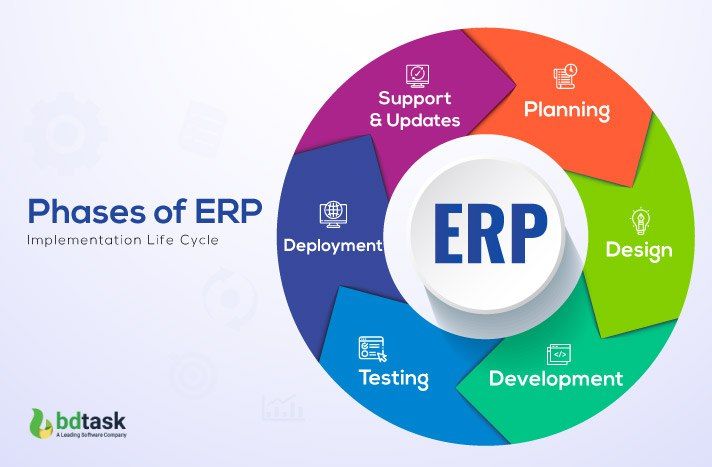
Setting up an ERP system needs careful preparation and attention to detail. A well-planned ERP project lifecycle ensures smooth implementation and proper utilization. Using the right testing tool, organizations can ensure the maintenance of functionality and performance throughout all phases. This article looks at the various stages of an ERP project and emphasizes that they require methodical testing.
Initiation phase of ERP project lifecycle
In the ERP project lifecycle, the initiation phase is where everything begins. At this time, organizations define their main aims, organize their finances, establish the project parameters, and determine who should be involved. Possible risks are assessed and expected benefits are analyzed through strategic assessments and feasibility studies. Selecting the right enterprise testing tool at this point ensures quality assurance complies with the project specifications. Additionally, it is important to thoroughly record details and identify all the necessary requirements early on.
Planning and design for ERP success
Detailed blueprints of the ERP system are created during the planning and design phase. They identify process flows, system specifications, and integration points. Testing professionals should be involved early in the ERP project lifecycle to define quality benchmarks. At this stage, using an enterprise testing tool assures that test plans include both functional and nonfunctional aspects. This proactive approach prevents future rework and minimizes the delay in deploying the system.
Implementation and system configuration
In the implementation phase, the ERP system is configured according to the business requirements. Data is migrated, modules are set up, and customizations are integrated. Errors in this stage of the ERP project lifecycle can disrupt operations. Module performance, data integrity, and system interfaces must be rigorously tested using an enterprise testing tool. Change management and user training should be performed properly to ensure a smooth transition.
Testing and quality assurance activities
Within the ERP project lifecycle, testing is an ongoing process. System reliability is ensured through functional, integration, regression, and user acceptance testing. An enterprise testing tool supports automation, defect tracking, and test coverage analysis, making testing more efficient. It is not only about finding bugs but also about making it more usable and compliant. Testing mitigates risks and ensures the stability of the ERP system.
Deployment and post-implementation support
The final phase involves deployment of the ERP system into the live environment. Extensive validation, performance monitoring, and end user support are needed for successful transition. The ERP project lifecycle does not end with deployment; post-implementation reviews and continuous improvement are required. Here an enterprise testing tool helps with monitoring, issue tracking, and regression testing after updates. Performance and user experience are optimized based on feedback from users.
Conclusion
Having a structured ERP project lifecycle ensures a smooth implementation and long-term success. The key lies in integrating a robust enterprise testing tool at every phase to maintain quality and functionality. Powered by agentic AI, Opkey’s ERP Lifecycle Optimization Platform offers an unparalleled advantage. Opkey uses special language models for ERP, process mining, and smart automation to provide top-notch testing from start to finish in the ERP lifecycle.
