
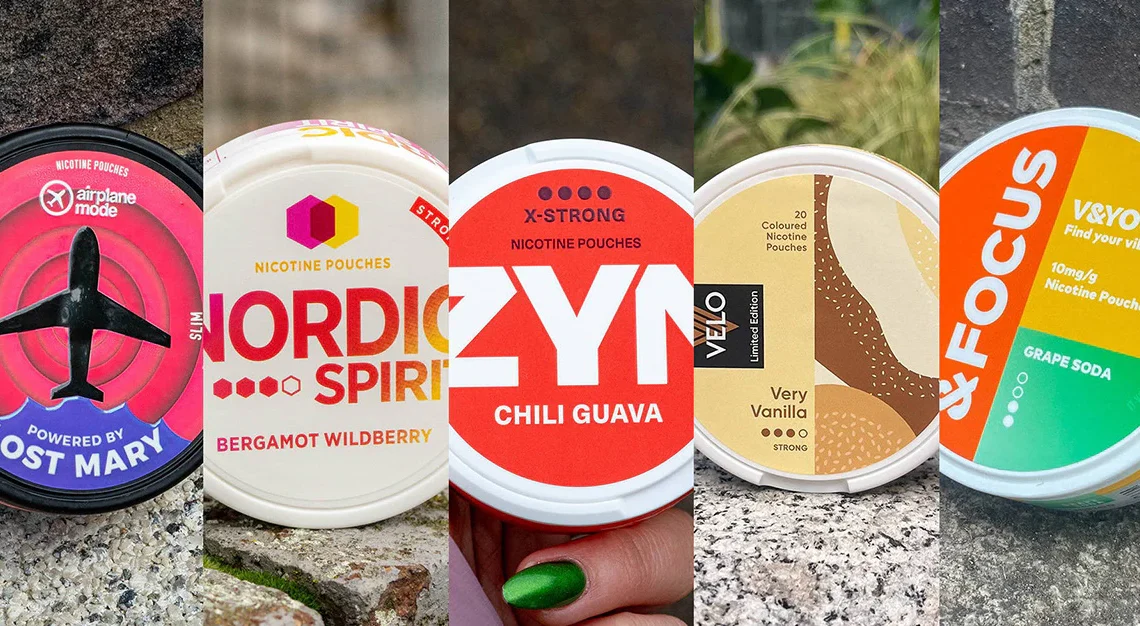
Nicotine pouches have officially gone mainstream. What started as a niche alternative to smoking and vaping has become a multi-billion-dollar global industry: the nicotine pouch market was valued at around $7.6 billion in 2024 and is projected to grow at over 30% annually through 2035. Monthly pouch sales in the U.S. alone more than doubled between early 2023 and April 2025.
This article looks at the top trending Nicotine Pouches brands in 2025—what’s driving their popularity, where they’re strongest, and the big trends shaping the market. Nothing here is an endorsement or medical advice: all nicotine products are addictive and carry health risks, and they’re intended only for adults who already use nicotine.
Why Nicotine Pouches Are Everywhere in 2025
Several shifts explain why pouches are “taking over” 2025:
- Smoke-free and often tobacco-free formats appeal to adults who want nicotine without combustion or visible vapor.
- Discreet use (small white pouches under the lip) fits office, travel, and social settings where smoking or vaping is not allowed.
- Aggressive marketing and social media hype, particularly around leading brands like ZYN, has boosted awareness globally.
- Huge commercial push: major tobacco companies and new specialist brands are racing to dominate what analysts expect will be a very large slice of the nicotine market by 2030.
Within this boom, a small group of brands is capturing a big share of sales and attention in 2025.
1. ZYN – The Market Leader That Keeps Growing
If there’s one name everyone associates with nicotine pouches in 2025, it’s ZYN.
- Research consistently finds ZYN is the top-selling pouch brand in the U.S. and globally, often holding the largest share of retail volume.
- Monthly sales of nicotine pouches in general have surged, and ZYN has been a major driver of that growth.
- In 2022, Philip Morris International (PMI) acquired Swedish Match (ZYN’s original owner), then heavily expanded distribution and marketing.
A major regulatory milestone came when the U.S. FDA authorized the sale of several ZYN products in 2024, the first time nicotine pouches received this kind of authorization. Regulators emphasized that these products may pose fewer health risks than cigarettes for adult smokers who switch completely—but also stressed that they are not harmless and still contain addictive nicotine.
In 2025, PMI has made it clear it wants ZYN to become as dominant in pouches as Marlboro once was in cigarettes, especially in emerging markets.
2. VELO – The Global Powerhouse
VELO, owned by British American Tobacco (BAT), is another giant in the pouch space—especially outside the United States.
- Market research frequently lists VELO alongside ZYN, On!, and Rogue as one of the top four pouch brands by sales.
- Industry analysis notes that VELO often leads pouch sales in markets outside the U.S.
In 2025, BAT has been pushing innovations like VELO Plus, a synthetic nicotine line aimed at adult consumers who want smoke-free and tobacco-free products.
VELO’s strength lies in:
- Wide international distribution (Europe, the UK, and other regions)
- A portfolio that tracks key consumer trends: strong mint flavors, various strengths, and slim formats that are easy to use discreetly.
3. On! – Minimalist Pouches With Major Shelf Space
On! doesn’t get as much social media buzz as ZYN, but it’s a core player in the “big four” of nicotine pouches.
Key points about On! in 2025:
- Widely distributed through convenience stores and online retailers, making it one of the most accessible brands.
- Known for small “mini” pouches that are easy to keep discreet and typically come in multiple nicotine strengths and standard flavors like mint, citrus, and coffee.
On! tends to appeal to adults who like a simple, no-frills design—small cans, clean branding, and familiar flavor choices rather than wild experimental blends.
4. Rogue – The Convenience-Store Favorite
Rogue is another standout, particularly in the U.S. market:
- Studies of sales and pricing trends repeatedly rank Rogue among the top-selling pouch brands, alongside ZYN, On!, and VELO.
- Rogue pouches are commonly positioned as a modern alternative to traditional oral tobacco, with multiple strengths and “everyday” flavors.
Rogue’s strategy combines:
- Strong retail presence in gas stations and convenience stores
- A broad nicotine range to match different adult tolerance levels.
Because of this, Rogue often becomes the “next brand people hear about” after ZYN, especially in regions where VELO is less visible.
5. High-Strength and Niche European Brands
Outside North America, high-strength and niche brands are trending among experienced adult pouch users. 2025 guides often highlight lines such as:
- Pablo – known for very strong pouches, often marketed to existing heavy nicotine users
- Killa – another high-strength option with bold branding
- Iceberg, White Fox, XQS, Nordic Spirit, and others – popular in Nordic and European markets and via international online shops
Many of these brands:
- Focus on intense strengths and “ice cold” mint, menthol, or candy-style flavors
- Target more experienced adult consumers who already use nicotine and want a strong effect
Because nicotine levels can be much higher than mainstream U.S. products, public-health experts warn that these lines may pose a higher risk of dependence and unpleasant side effects, especially for people who are new to nicotine.
Trends Shaping Nicotine Pouches in 2025
Across all brands, several clear trends define the 2025 landscape:
1. Flavor Wars
Market data shows that mint, fruit, and coffee-style flavors dominate pouch sales in North America. This is reflected in brand catalogs, where:
- Mint and spearmint are the “default” options
- Berry, citrus, and tropical blends are common
- Coffee and cola-style flavors target adults who like café or soda notes
At the same time, flavors are a regulatory flashpoint, with critics warning that sweet or candy-like options may appeal to underage users.
2. Online-First Sales and Subscriptions
Analysts estimate that a large share of pouch sales—around 40% in some regions—occur online, boosting direct-to-consumer brands and subscription models.
Brand websites and specialized retailers frequently:
- Offer multi-can bundles
- Promote loyalty programs
- Provide wide flavor/strength filters so adult customers can compare options
3. New Demographics
While early adoption skewed heavily male, 2025 reporting highlights rapid growth among women and a broadening age range of adult users. Social media trends, influencer content, and lifestyle branding have all contributed to this expansion.
Health, Safety, and Regulation
Despite the sleek branding and “clean” image, it’s important to keep the basics in mind:
- No nicotine product is safe. Public-health organizations emphasize that pouches are addictive and can affect cardiovascular and oral health.
- Many nicotine pouch products in the U.S. have not received FDA authorization and may technically be on the market illegally.
- Some countries (including Norway, France, the Netherlands, and Belgium) have moved to limit or ban nicotine pouches due to youth-use concerns and regulatory gaps.
For adult smokers who already use nicotine, regulators sometimes describe pouches as potentially lower-risk alternatives to continued cigarette smoking—if used to completely switch away from combustible products. But that doesn’t mean they’re harmless, and they’re not recommended for people who don’t already use nicotine.
The Bottom Line
In 2025, nicotine pouches are no longer a fringe product—they’re a fast-growing, highly competitive category.
- ZYN leads in sales and visibility, backed by PMI and recent FDA authorizations.
- VELO, On!, and Rogue form the rest of the “big four,” with strong positions across North America and international markets.
- A wave of high-strength European brands such as Pablo, Killa, Iceberg, and White Fox is gaining traction among experienced adult users, especially online.
At the same time, governments and health organizations are trying to catch up with regulation, balance harm-reduction potential against youth protection, and respond to a market growing at astonishing speed.
For anyone researching this space—whether from a public-health, business, or policy perspective—the key message in 2025 is simple: nicotine pouches are here to stay, but the conversation about who should use them, how they’re regulated, and how risks are communicated is only just beginning.
