
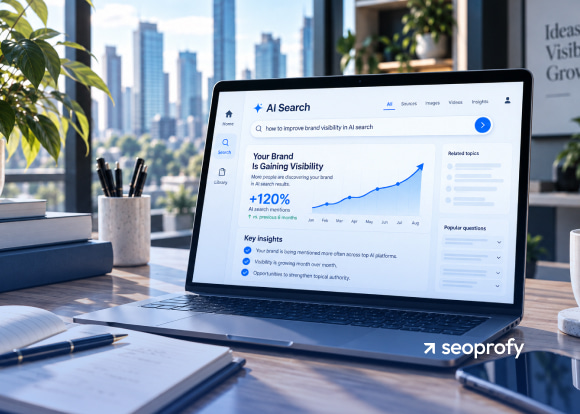
People now ask ChatGPT, Perplexity, and Google’s AI features for explanations, comparisons, and recommendations—not just lists of websites. For a business, that changes the path from being discovered to being considered. AI search optimisation is the work of making information clear, credible, and useful enough to be found and understood in these changing search experiences. It is not a shortcut or a separate trick; it builds on sound publishing and search practices.
The details differ across platforms, and their systems change over time. Still, businesses can take practical steps to help their expertise show up in the sources and answers people rely on. That starts with understanding what AI systems can interpret as evidence.
Backlinks Still Matter, but Context Matters Too
A backlink is a link from one website to another. Search engines have long used links as clues about a page’s reputation and relevance. AI-powered search adds another layer: systems may retrieve pages, assess their content, and use cited sources to support an answer. A link alone does not guarantee inclusion, but links from relevant, trustworthy pages can help search systems discover content and understand its place in a wider subject.
That makes the quality and context of a link more important than simply collecting a large number. A mention on a respected industry blog that discusses your work in detail is generally more meaningful than a link placed on an unrelated page with little editorial value. For a deeper look at how different platforms may interpret those signals, see how AI search evaluates backlinks.
Publish Pages That Answer Real Questions
AI answers are often built around questions people ask in ordinary language: what a service costs, how a process works, which option fits a specific need, or what to watch out for. Businesses can make their expertise easier to use by publishing direct, well-organised explanations rather than vague promotional copy.
Start with the questions customers actually raise. Give the answer near the top of the page, then add useful detail, examples, limitations, and next steps. A local Florida business might explain how seasonal weather affects a service, what customers should prepare before booking, and which factors influence the final cost. Specific, verifiable information is more helpful to readers—and easier for systems to interpret—than broad claims such as “the best choice for everyone.”
Make Expertise Easy to Check
Credibility is not established by confident wording alone. Identify the author or business behind important content, explain relevant experience, and keep dates and details current. Where a topic involves health, money, safety, or legal obligations, be especially careful to distinguish general information from professional advice.
Support claims with evidence that readers can assess. Explain how a recommendation was reached, note meaningful trade-offs, and correct outdated information. Original research, first-hand experience, and detailed examples give a page substance that a generic summary cannot provide. These habits serve human readers first, while also giving search systems clearer signals about who is speaking and what the page contributes.
Build a Coherent Web Presence
One strong page can help, but a consistent body of useful work makes expertise easier to recognize. Cover a subject from several angles: a practical guide, a cost breakdown, common mistakes, and answers to follow-up questions. Link related pages on your own site where it genuinely helps people move from a broad explanation to a more specific one.
Outside mentions can add context, too, when they come from relevant publications and offer real editorial value. Guest posting can be one way to contribute expertise to another blog, provided the article is original and written for that publication’s readers. A resource such as guest posting opportunities may help publishers and contributors explore that part of the process; the value still depends on the fit and quality of the finished work.
Measure More Than Rankings
Visibility in AI answers can be harder to track than a traditional search position. Look at a mix of indicators: organic traffic, qualified inquiries, referral visits, branded searches, and whether relevant pages are being cited or surfaced in answer tools. Keep records of the questions you test and the sources that appear, but treat occasional results as observations rather than guarantees. Responses can vary with the query, location, and platform updates.
Use the findings to improve the page, not to chase every fluctuation. If people arrive but leave without finding what they need, clarify the answer or make the next step easier to understand. If a page earns impressions but few visits, check whether its title accurately reflects the content. Good measurement connects visibility with usefulness and business outcomes.
Skills and Tools Can Fill Practical Gaps
Smaller companies may not have an in-house writer, technical specialist, or marketing analyst for every task. Freelance support can help with defined work such as editing a guide, reviewing site structure, or producing a video that explains a service. When comparing providers, consider relevant experience, communication, scope, and examples—not just the lowest price. For instance, someone researching coaching for competitive play can use Osdire’s guide to hiring a Valorant coach to think through fit, costs, and expectations before choosing help.
Whatever the project, set clear deliverables and review the work before it goes live. A freelancer can support a strategy, but no service can promise that a particular AI system will cite a page.
Keep the Reader at the Center
AI search optimisation is best treated as an extension of clear communication: publish accurate answers, show where your knowledge comes from, and earn relevant mentions through useful work. Platform features will keep changing, but readers will still need information they can trust and act on. Businesses that build for that need are better placed to remain discoverable, whether a customer finds them through a familiar search results page or an AI-generated answer.
