
Key Takeaways
- Small inspections can help prevent larger repairs and missed safety issues.
- Dividing maintenance by season and frequency makes the work more manageable.
- Safety equipment needs regular attention alongside engines, batteries, and hull hardware.
- A simple maintenance log helps owners track service, parts, and recurring concerns.
- Fuel, electrical, steering, and structural problems may require the expertise of a qualified marine technician.
Consistent maintenance helps boat owners catch small problems before they disrupt a day on the water or require more extensive repairs. Whether you perform basic checks yourself or search for outboard motors repair near me when a problem needs professional attention, a year-round routine makes ownership easier to manage.
Every vessel has its own service requirements, so the engine, trailer, battery, and equipment manuals should guide exact intervals and procedures. This checklist provides a practical framework for organizing regular inspections around trips, months, and changing seasons.
Table of Contents
- Why Seasonal Maintenance Matters
- What to Check Before Every Trip
- Monthly Checks During Boating Season
- Spring Preparation and Launch Checks
- Midseason Review for Common Wear
- Fall Service and Storage Preparation
- Safety Equipment That Should Stay Current
- DIY Tasks and Professional Service
- How to Build a Maintenance Log
- A Simple Year-Round Checklist
Why Seasonal Maintenance Matters
Boats are exposed to moisture, vibration, ultraviolet light, temperature changes, and corrosion. Even a vessel that sits unused can develop a weak battery, stale fuel, mildew, loose hardware, or a minor leak. Seasonal planning spreads the workload throughout the year rather than leaving every task until launch day.
Minor issues are often easier to address early. For example, a loose battery cable may cause an intermittent no-start condition, while water entering through a failed seal can damage nearby materials and wiring if left unnoticed.
What to Check Before Every Trip
A pre-departure walk-around should take only a few minutes, but it can identify problems that are easier to solve at the dock or ramp than on the water.
- Confirm the fuel level and investigate unusual fuel odors.
- Inspect the bilge for excess water, oil, or fuel.
- Make sure drain plugs are installed before launching.
- Start the engine and watch for warning indicators or unusual sounds.
- Check steering, throttle, shift controls, lights, horn, and basic electronics.
- Confirm life jackets and required safety equipment are accessible.
- Review weather, water conditions, and the intended route.
Owners who are maintaining a current vessel while also comparing boats for sale in Missouri can use the same inspection habits to evaluate condition, equipment access, and maintenance records.
A voluntary vessel safety check can also help identify overlooked gear and compliance concerns. These inspections commonly review items such as life jackets, registration, navigation lights, ventilation, fire extinguishers, and distress signals.
Monthly Checks During Boating Season
Monthly inspections give owners time to look beyond the immediate pre-trip items. Focus on systems that experience heat, vibration, water exposure, and normal wear.
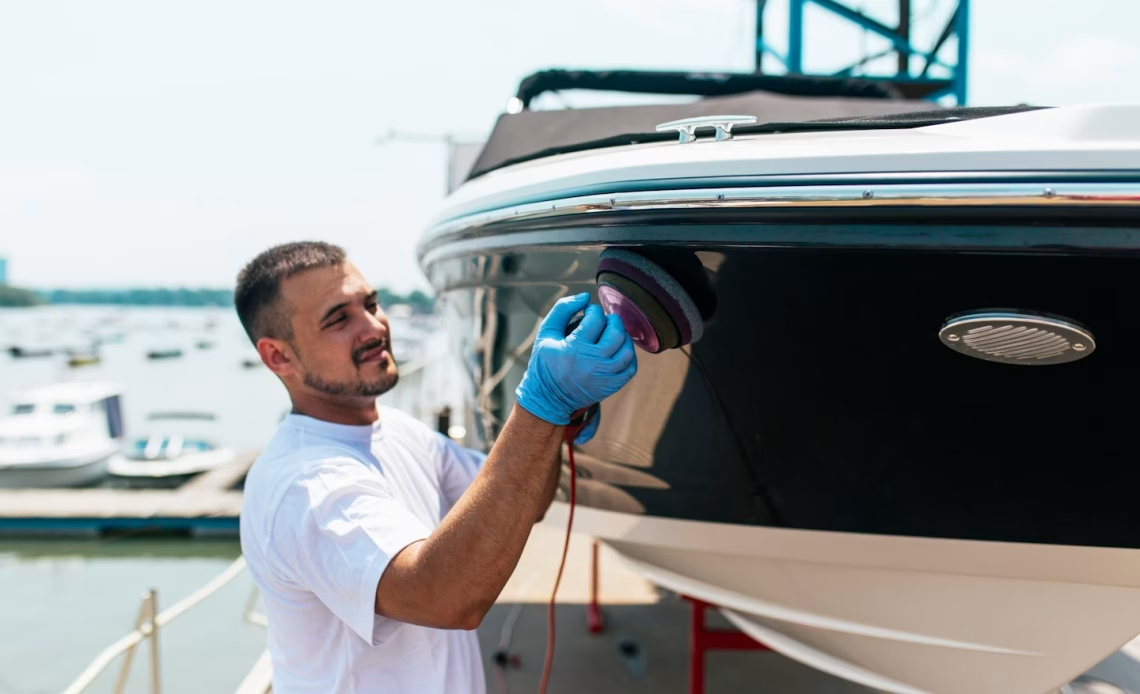
Wide photorealistic establishing shot of a well-maintained recreational boat at a marina during boating season, with an owner conducting a visible inspection near the engine and trailer while the dock, surrounding water, safety equipment, and marina environment provide context and scale.
Engine and Fuel System
- Check fluid levels and inspect for visible leaks.
- Look for cracked hoses, loose clamps, damaged wiring, or corrosion.
- Inspect fuel filters and water separators when the equipment uses them.
- Compare engine hours with the manufacturer’s recommended service schedule.
Electrical System, Hull, and Hardware
- Check battery charge, cable tightness, and visible terminal corrosion.
- Test pumps, switches, lights, chargers, and electronics.
- Inspect cleats, rails, hinges, latches, seals, and canvas attachments.
- Clean dirt, salt, and growth that could hide damage or wear.
Spring Preparation and Launch Checks
After storage, do not wait until the first major outing to test important systems. Inspect the hull, propeller, lower unit, and visible underwater hardware. Check required fluids and filters, charge and test batteries, inspect belts and hoses, and test bilge pumps, blowers, lights, horn, and navigation equipment.
Before heading far from shore, run the engine safely according to the manufacturer’s instructions and take a short shakedown trip near the launch point. Review registration, insurance documents, and safety gear at the same time. Storage methods, engine designs, and local climate vary, so the owner’s manual remains the final authority.
Midseason Review for Common Wear
A boat can still start and run while developing wear that deserves attention. Midseason is a useful time to inspect the propeller for damage or vibration, check trailer tires, lights, straps, winch components, and bearings, and examine dock lines, anchor lines, fenders, and tow equipment. Clean and protect exposed surfaces from sun and salt, then replace emergency supplies that have been used, damaged, or misplaced.
Fall Service and Storage Preparation
End-of-season work should begin before a boat is left unattended for an extended period. In freezing climates, water systems and equipment need protection from freeze damage. In warmer areas where boats remain in use, owners may focus more on cleaning, corrosion control, inspections, and scheduled service.
- Wash and dry the boat thoroughly.
- Document hull, deck, and trailer damage that needs repair.
- Service the engine and drive system as directed by the manual.
- Prepare the fuel system and batteries for the expected storage period.
- Drain water systems when freezing temperatures are possible.
- Clean and dry compartments, cushions, covers, and safety gear.
- Use ventilation and a secure breathable cover to limit trapped moisture.
Safety Equipment That Should Stay Current
Safety gear should not become an afterthought. Check that life jackets are serviceable and appropriately sized, fire extinguishers are in good condition, signaling devices remain within their service period, and navigation lights and sound-producing equipment operate properly. Review first-aid supplies, throwable flotation devices, retrieval lines, and carbon monoxide or gasoline-fume detection equipment where applicable.
Requirements can vary by vessel type, location, and use, so an annual equipment check is a good time to review hazard notices, recalls, and regulations alongside guidance from national boating safety advocacy groups.
DIY Tasks and Professional Service
Many owners can handle cleaning, visual inspections, basic fluid checks, recordkeeping, battery-terminal cleaning, and trailer checks. Professional help is a better fit for persistent fuel odors, engine diagnostics, recurring electrical faults, steering or control problems, major leaks, structural damage, and repairs that require specialized testing equipment.
How to Build a Maintenance Log
A notebook, spreadsheet, or phone app can serve as a maintenance log if it is updated consistently. Record the date, engine hours, completed task, parts or fluids used, problems noticed, photos of damage, the next service target, and the person or shop that completed the work. Good records can reveal repeat problems and make future service visits more efficient.
A Simple Year-Round Checklist
- Before every trip: Check fuel, bilge, controls, lights, weather, and safety gear.
- Monthly: Inspect batteries, fluids, pumps, hoses, hardware, trailer parts, and corrosion.
- Spring: Test systems, complete launch preparation, and take a shakedown trip.
- Midseason: Look for wear caused by use, trailering, vibration, sun, and salt.
- Fall: Clean, inspect, service, document, and prepare for storage conditions.
- Annually: Review manuals, safety-equipment dates, recalls, and unresolved repairs.
Conclusion
A dependable maintenance plan does not need to be complicated. It needs to be consistent, matched to the boat’s equipment and storage conditions, and updated when something changes. Regular checks help keep small concerns manageable and help owners spend more time prepared for the water.
