
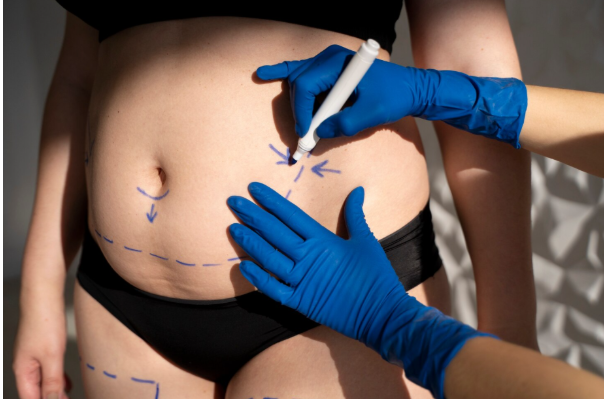
Tummy tuck surgery, also known as abdominoplasty, is a procedure used to remove selected excess skin and fat from the abdomen and, in some cases, address changes in the abdominal wall.
People consider the procedure for different reasons. Pregnancy, significant weight loss, ageing, and changes in skin elasticity can leave excess skin that does not respond to diet or exercise.
A tummy tuck is a major surgical procedure, so understanding the process from consultation through recovery is important before making a decision.
What Is Tummy Tuck Surgery?
Tummy tuck surgery reshapes the abdominal area by removing excess skin and, where appropriate, some excess fat. The procedure can also involve tightening or repairing the abdominal wall.
It is different from liposuction and is not designed as a weight-loss treatment.
If you would like to find out more about tummy tuck surgery, a consultation with a qualified plastic surgeon can help explain the available options and whether the procedure may be suitable.
The amount of tissue removed and the surgical technique depend on your anatomy, the amount of excess skin, and the condition of the abdominal wall.
What Happens During the Consultation?
The consultation allows the surgeon to assess whether tummy tuck surgery is appropriate.
Your medical history, previous operations, medications, and general health are reviewed. The surgeon examines the abdomen to assess skin quality, excess tissue, existing scars, and the abdominal wall.
Your expectations are also discussed. If you are planning significant weight loss or pregnancy, these plans are important because future changes can affect the surgical result.
The surgeon should explain the proposed technique, incision, recovery period, potential risks, and expected outcome.
What Happens During the Procedure?
Tummy tuck surgery is performed under anaesthesia.
The surgeon usually makes an incision across the lower abdomen. The length and position vary according to the amount of excess skin and the surgical technique.
The abdominal skin is separated from the underlying tissues, and excess skin is removed. Where appropriate, the abdominal wall is repaired or tightened.
The remaining skin is then repositioned, and the incision is closed.
The belly button might need to be repositioned during a full abdominoplasty because the surrounding skin is moved.
What Is a Mini Tummy Tuck?
A mini tummy tuck is generally used when excess skin is concentrated in the lower abdomen.
It usually involves a smaller area of tissue removal than a full abdominoplasty. The exact technique varies between patients.
A mini procedure is not automatically preferable because the appropriate approach depends on the location and amount of excess skin and the condition of the abdominal wall.
Your surgeon can explain which technique matches your anatomy.
Is Liposuction Used With Tummy Tuck Surgery?
Some patients have both abdominoplasty and liposuction, depending on their goals and anatomy.
Liposuction removes localised fat, while a tummy tuck primarily addresses excess skin and abdominal wall changes.
Combining procedures increases the scope of treatment and can also affect recovery and surgical risk. Your surgeon should explain whether combining procedures is appropriate for your circumstances.
What Happens Immediately After Surgery?
After surgery, you will be monitored while the effects of anaesthesia wear off.
The abdomen can feel tight, swollen and uncomfortable. Bruising is also common during the early recovery period.
Your surgical team will provide instructions about wound care, medication, movement and follow-up appointments.
Some patients have drains temporarily placed to remove fluid from the surgical area. If drains are used, the surgical team will explain how they should be managed and when they are expected to be removed.
What Is Recovery Like?
Recovery varies according to the extent of surgery and individual healing.
Walking is generally encouraged during recovery, but strenuous activity and heavy lifting are restricted initially.
You might need to sleep in a particular position or avoid standing completely upright during the early stages, depending on your surgeon’s instructions.
Swelling can take time to settle, and the final appearance does not become clear immediately after surgery.
Follow-up appointments allow the surgeon to monitor healing and address any concerns.
When Can You Return to Work?
The timing depends on the type of work you do and the extent of your procedure.
People with desk-based jobs often return sooner than those whose work involves lifting, prolonged standing, or physical activity.
Your surgeon will advise when you can safely resume work.
Returning to physically demanding activities too soon can interfere with healing, so following the recommended restrictions is important.
When Can You Exercise?
Physical activity should be increased gradually.
Walking is commonly encouraged during the early recovery period, while strenuous exercise and heavy lifting are restricted.
Exercises involving significant abdominal strain require particular caution. Your surgeon will determine when these activities are appropriate based on your healing.
Even when you feel better, the internal tissues still require time to recover.
What Are the Risks of Tummy Tuck Surgery?
Abdominoplasty carries potential risks because it is a major operation.
Possible complications include bleeding, infection, fluid accumulation, wound-healing problems, changes in skin sensation, and noticeable scarring.
Blood clots and other complications associated with surgery can also occur.
Individual risk varies according to factors such as general health, smoking status, the extent of surgery, and whether other procedures are performed at the same time.
A qualified surgeon should discuss these risks before you consent to surgery.
Can Tummy Tuck Surgery Remove Stretch Marks?
A tummy tuck can remove some skin containing stretch marks if those marks are located within the section of skin removed during surgery.
It does not remove all stretch marks across the abdomen.
The amount of skin removed and the position of stretch marks determine how much visible improvement is possible.
This should be discussed during the consultation so expectations remain realistic.
Can the Results Last?
The results of tummy tuck surgery can be long-lasting when your weight remains relatively stable.
Future pregnancy, significant weight changes, and natural ageing can alter the abdominal area again.
For this reason, people planning pregnancy or substantial weight loss might be advised to delay surgery.
A tummy tuck does not prevent future changes in body shape.
What Should You Ask Your Surgeon?
Before surgery, ask which type of abdominoplasty is being recommended and why.
You should understand where the incision will be located, whether abdominal wall repair is planned, and what the recovery process involves.
Ask about potential complications, scar management, activity restrictions, and follow-up appointments.
How Do You Choose a Suitable Surgeon?
Tummy tuck surgery should be performed by a suitably qualified and experienced surgeon in an appropriate medical facility.
During consultations, ask about the surgeon’s qualifications, experience with abdominoplasty, and the type of procedure being proposed.
You should also understand who will provide your care after surgery and where you should seek help if a problem develops.
Taking time to understand these details can support a more informed decision.
Conclusion
Tummy tuck surgery involves removing selected excess abdominal skin and fat and, in suitable patients, repairing or tightening the abdominal wall.
The process begins with a detailed consultation and assessment. Preparation, surgery, and recovery each involve specific considerations, including activity restrictions, wound care, and follow-up.
