
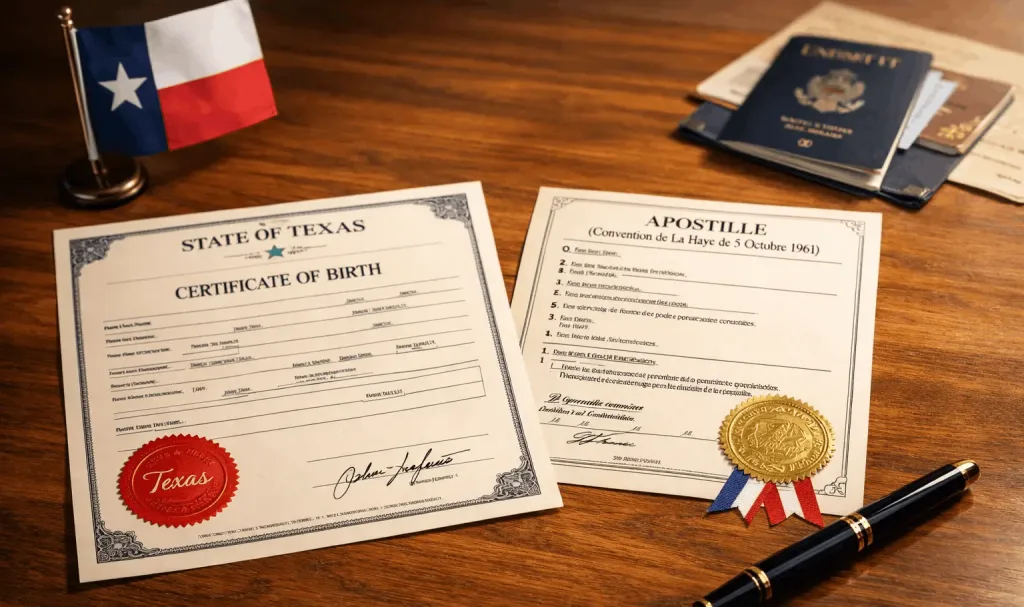
Most people do not think about their birth certificate very often. It may spend years tucked into a filing cabinet or safe, only to become surprisingly important when a major life event requires proof of identity, age, citizenship or family relationships.
That is why a simple personal-records check can save considerable stress. Floridians do not need to carry vital records around every day, but they should know where certified copies are stored, whether the information is correct and how they would obtain another copy if the original could not be located.
If your copy has disappeared or you discover you need an additional certified record, it is worth learning how to get a Florida birth certificate before an application or deadline becomes urgent. Requirements can depend on who is requesting the record and what the certificate will ultimately be used for, so checking the details early is usually easier than solving the problem at the last minute.
1. Before Applying for Your First Passport
International travel is one of the most common reasons people suddenly start searching through old document folders.
First-time passport applicants generally need evidence of U.S. citizenship, and a qualifying birth certificate can be one way to establish it. The important lesson is not to wait until flights have been booked. If an international trip is on the horizon, locate the relevant records before committing to an expensive itinerary.
Look closely at the certificate you have rather than assuming any old photocopy will serve every purpose. If another copy is required, having several weeks or months to deal with it gives you far more flexibility.
2. When Sorting Out REAL ID Documents
Another moment when birth records can come back into focus is when dealing with identification.
REAL ID requirements now affect many people using state-issued identification for domestic air travel. Depending on the documents someone already has, proof of identity such as a birth certificate or passport may form part of the paperwork needed when applying for compliant identification.
Before making an appointment or gathering paperwork, compare the name on your birth record with your current legal identification. Marriage, divorce or another legal name change may mean additional records are needed to connect the two.
3. Before Using Documents Overseas
A birth certificate can also become relevant when life takes you outside the United States for something more complicated than a vacation.
Studying abroad, marrying overseas, handling dual-nationality matters or completing certain international legal processes can involve requests for authenticated documents. The exact requirements vary by country and purpose, so it is important to find out what the receiving organization expects before sending anything.
Florida Hot Topics has previously looked at international document authentication, including the role apostilles can play when public records need to be recognized in another country.
Do not assume that a document accepted for one U.S. process will automatically be ready for foreign use. International paperwork often has an additional layer of requirements.
4. When Organizing Family Records
Birth certificates become especially easy to lose when family paperwork is spread across multiple homes, drawers and digital folders.
Parents may have records for several children alongside passports, school paperwork, insurance information and other sensitive documents. Adult children may discover years later that their original records are still stored at a parent’s home.
A good system does not require carrying these documents with you. In fact, sensitive records are generally safer when stored securely and accessed only when necessary.
Experian’s advice on protecting personal documents recommends safeguarding records that contain personal information rather than leaving them in easily accessible places.
Consider creating a simple inventory of important family documents. You do not need to record every sensitive number in the inventory; just note what exists and where it is securely stored.
5. After a Major Life Change
A move, marriage, divorce, adoption or other major transition is a good reason to review personal records as a group.
The birth certificate itself may not change, but the way it connects with your other identification can. For example, someone using a new legal surname may need documentation that explains why the name on an original birth record differs from the name currently used.
This is also a sensible time to check passports, driver’s licenses, financial records, insurance documents and emergency contacts.
Instead of treating each update as a separate administrative chore, use the life event as a trigger for one broader records reset.
A Ten-Minute Check Can Prevent a Last-Minute Scramble
Birth certificates are easy to ignore precisely because most people do not need them every week. The problem is that when one is required, it is often connected to something important: travel, identification, family matters or an international move.
Knowing where your certified copy is stored—and noticing that it is missing before a deadline appears—turns a potentially stressful problem into an ordinary administrative task.
For Florida residents, the practical habit is simple: keep important records secure, understand which documents major applications may require and review them whenever life changes. Ten minutes spent checking a file today can be far more convenient than searching for it the night before an appointment.
